

The Calgary Stampede is one of North America’s largest cowboy rodeo festivals, held annually in Calgary every July. During this time, spectators watch rodeo events, exciting competitions, parades, stage shows, concerts, visit exhibitions, and participate in various outdoor activities, writes calgaryski.net.
Origins in 1886
The event began in 1886 when the Calgary and District Agricultural Society hosted its first fair, inviting 2,000 local residents. In 1889, the Society purchased land along the Elbow River for exhibitions, but crop failure and economic downturn caused the Society’s activities to cease in 1895. The land was sold to the city and named “Victoria Park” in honor of Queen Victoria. In 1899, the Western Pacific Exhibition Company held an agricultural and industrial fair on the land.
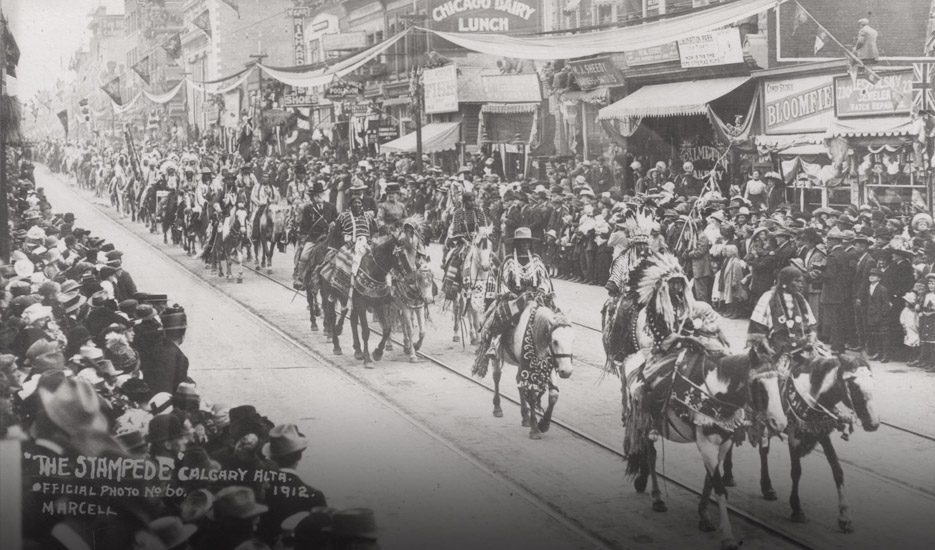
In 1908, the Canadian government announced that Calgary would host the Dominion Exhibition, an annual event held from 1879 to 1913. This was an opportunity for the city to advertise itself, and it constructed six new exhibition pavilions and a racetrack. The event featured a lavish parade, rodeo, horse racing, and trick competitions, drawing 100,000 attendees (at the time, Calgary’s population was only 25,000).
Guy Weadick’s Contribution
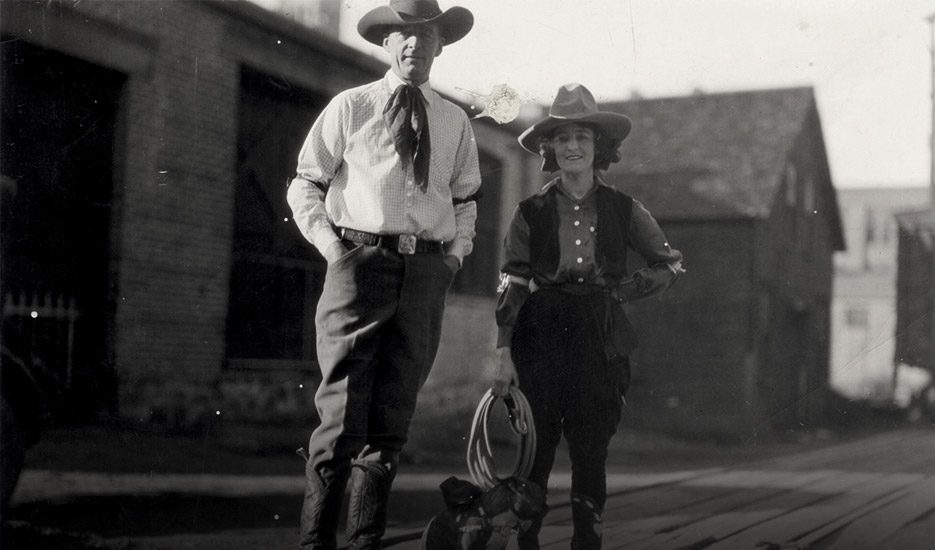
American-Canadian cowboy, performer, and promoter Guy Weadick from New York organized a similar event on this site in 1912. After visiting Calgary, he decided it was the best location for a Wild West show.
Weadick later turned the event into a full-fledged festival, calling it the “Stampede.” With the help of local livestock agent H. S. MacMullen, Guy convinced Calgary’s business elite (“The Big Four”) to contribute $100,000 to fund the event. The event was a success, generating $120,000 in revenue.
In 1913, Weadick attempted to replicate the event in Winnipeg, but it failed to be profitable. His third attempt in 1916 in New York was also unsuccessful. After returning to Calgary in 1919, he gained the support of E. L. Richardson, the General Manager of the Calgary Industrial Exhibition. Together, they convinced the community, especially “The Big Four,” to organize a show dedicated to soldiers returning from World War I.
The Success of a Combined Event
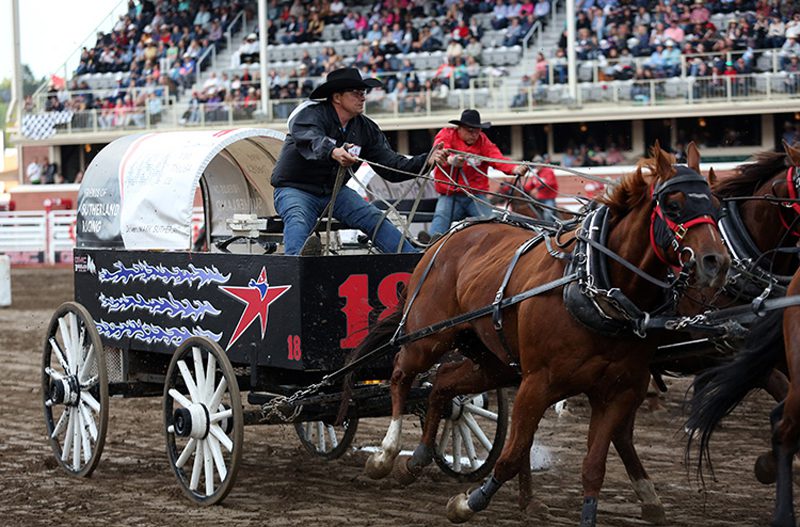
Starting in 1923, the festival was held annually alongside the Calgary Industrial Exhibition and was renamed the Calgary Exhibition and Stampede. The six-day event was organized by thousands of volunteers and supported by community leaders. For example, Calgary’s mayor George Webster allowed roads in the city center to be closed for the event. That same year, the Rangeland Derby, wagon races, were introduced. These wagons were modified food supply carts that were historically used to feed cowboys on the range.
The 1923 event was a financial success, attracting 138,950 visitors. Calgary Exhibition and Stampede soon became one of the wealthiest rodeos in the world and one of Canada’s largest festivals, with a special party atmosphere: office buildings and store windows were painted in cowboy style, residents wore western attire, and traditional pancake breakfasts were served throughout the city.
Growth and Challenges
Attendance grew year after year, peaking at 258,496 visitors in 1928. However, the Great Depression led to a decline in attendance and financial losses. In 1930 and 1931, financial difficulties caused a rift between the Exhibition Board and Guy Weadick. In 1932, the Board fired Weadick. Weadick sued for wrongful dismissal, demanding $100,000 in compensation but was awarded only $2,750. He spent the next 20 years in disputes with the city government until he was invited back as an honorary guest and parade marshal in 1952.
Festival Expansion
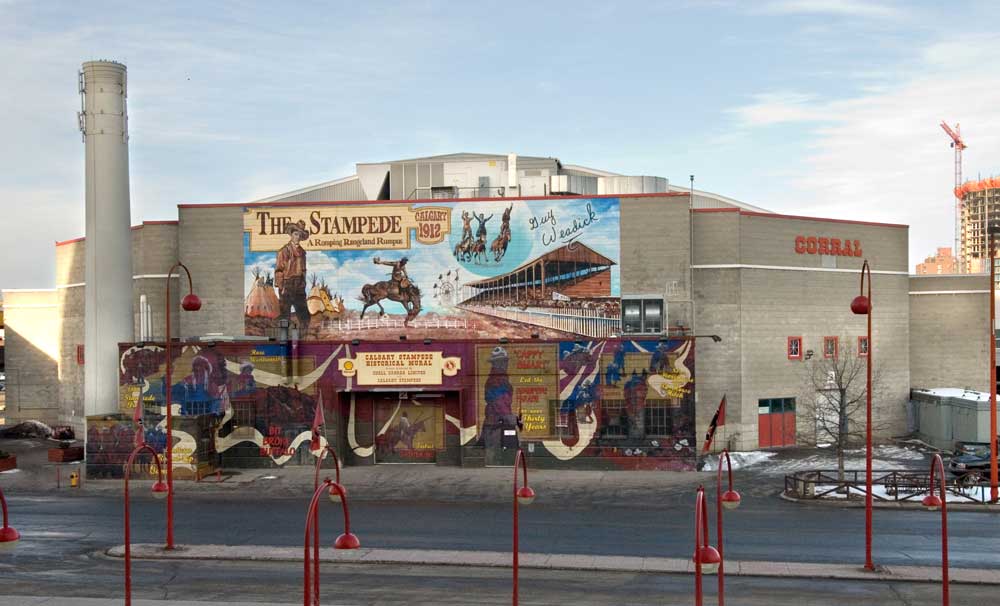
As attendance continued to break records, there was a need to expand the exhibition area. In 1950, the Stampede Corral, a 7,500-seat arena, was built. This multi-purpose sports complex hosted hockey, tennis, and rodeo competitions and concerts by artists like Louis Armstrong, though it had poor acoustics. By 1950, seven films had been made during the festival, with the most profitable being the 1925 western The Calgary Stampede.
In 1954, the racetrack was redesigned, and in 1959, the “Big Four” building, Calgary’s largest exhibition hall, opened. Despite these improvements, space shortages persisted, especially for parking and spectator areas.
In the 1960s and 1970s, attendance continued to grow, surpassing 500,000 in 1962. The event was extended from 6 to 9 days in 1967, and by 1977, more than 1 million visitors attended. The park continued to grow, with new buildings like the “Round-Up Centre” opening in 1979, and the “Scotiabank Saddledome,” the city’s primary sports arena, opening in 1983.
Celebrating Western Heritage
Calgary evolved into a major financial and oil center, but the festival maintained its focus on agriculture and the city’s western heritage. In 1989, the “Egg Days” program was introduced to educate urban schoolchildren about farming.
In 2007, the Calgary Exhibition and Stampede shortened its name to Calgary Stampede. The festival hit a new attendance record in 2012 during its 100th anniversary, drawing 1,409,371 visitors.
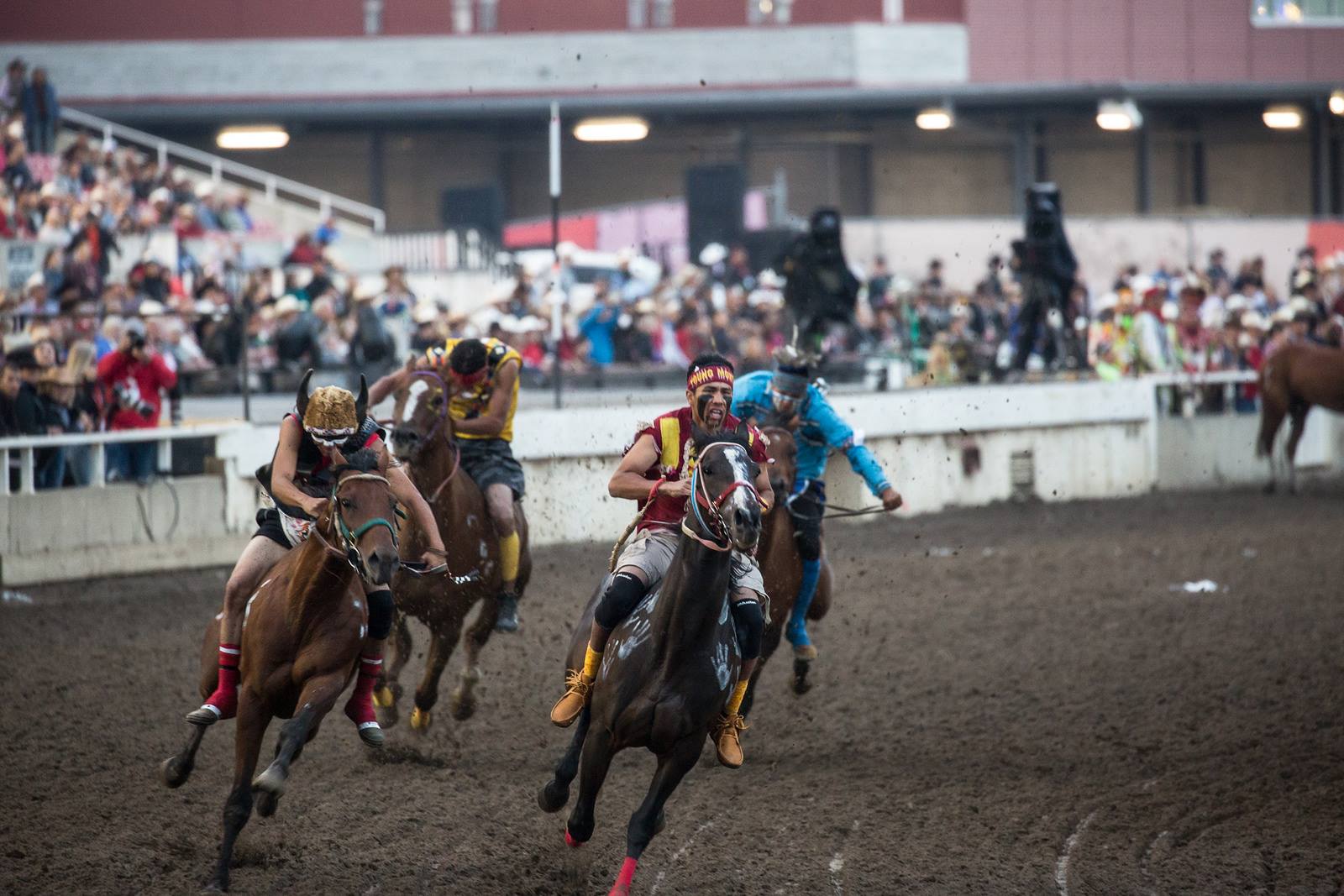
In 2018, Indian relay racing was added to the festival. This high-speed event features riders racing without saddles and changing horses every lap. It is considered the oldest extreme sport in North America.
Controversies Over Animal Welfare
The festival has faced criticism for its use of animals in events. In 1986, 12 horses were euthanized after injuries sustained during the festival’s competitions. In 2002, six horses were euthanized, and in 2005, nine frightened horses jumped into the Bow River during the annual horseback ride from the Stampede Ranch to Calgary. After these incidents, festival organizers had to prove that safe conditions for the animals had been implemented, and the annual horseback ride was eventually canceled.
The Calgary Stampede continues to be a major event, blending western heritage with modern celebrations.