

The history of Calgary’s Jewish community is an integral part of the city’s multicultural story. The first Jewish settlers arrived in the city in the late 19th century, during one of Canada’s major waves of immigration. They brought with them not only an entrepreneurial spirit but also their rich cultural and spiritual traditions. Despite facing numerous challenges, they succeeded in building a vibrant and resilient community. In this article on calgaryski, we’ll explore how the Jewish community in Calgary developed over the years.
The Beginning: The Diamonds
The story of Calgary’s Jewish community began when Jacob Diamond and his brothers became Alberta’s first Jewish settlers in 1889. By 1905, there were 50 Jewish residents in the region, and by 1911, that number had grown to over 600. Most of them had immigrated from the Russian Empire, fleeing pogroms and persecution.
In 1904, Jacob Diamond purchased land for the first Jewish cemetery in Calgary, and in 1911, he did the same for the first synagogue, named ‘Beth Jacob’ (House of Jacob). The young Jewish community was highly influential, actively involving local politicians and officials in the synagogue project.
Many Jewish settlers established themselves in ‘block settlements’ near the farming communities of Trochu, Rumsey, and Sibbald. These were very successful farmers who, at the same time, played an active role in community life. Within a generation, these families left farming behind as Jewish urban life became increasingly attractive.
How the Community Grew
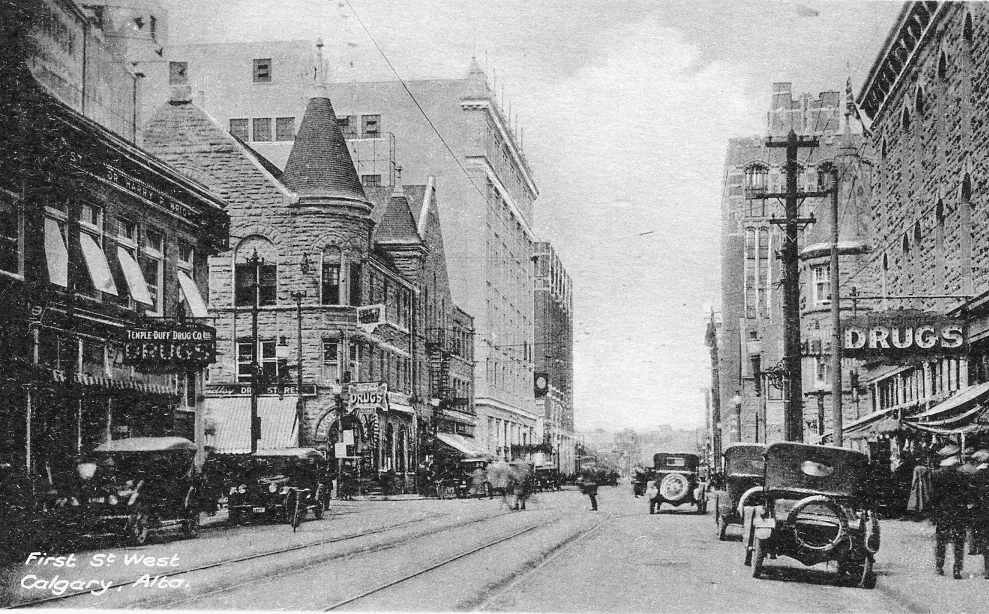
Immigration slowed during the First World War, but the city’s Jewish community continued to flourish. The Calgary Talmud Torah School offered after-school classes in Judaic studies for children. In addition, numerous Zionist organizations were active in the city.
The 1920s saw another wave of Jewish immigration. This led to the establishment of the I.L. Peretz Institute in 1929, and shortly after, Calgary’s first Jewish day school was opened. A few years later, the ‘House of Israel’ Jewish Community Centre was also built. By 1931, the city was home to 1,600 Jews, making up two percent of Calgary’s total population.
In the early 1930s, Calgary’s Jews were concerned about the rise of Nazism in Germany and unsuccessfully tried to persuade the federal government to liberalize its immigration policies for Jews. They were also worried about the new Alberta government, which included openly antisemitic members. Many Jews experienced professional and social restrictions during this time.
The Second World War and Calgary’s Jewish Community
During the Second World War, one in ten local Jews enlisted in the armed forces. Ten of them were killed in action, and several were decorated for bravery. After the war, Jewish veterans applied their new skills to civilian life. They pursued university education, started businesses, and drove post-war community development. Many Holocaust survivors also arrived in Alberta during this period.
Rapid Community Growth
Beginning in 1959, the city’s Jewish community experienced a major building boom. Within a few years, two new synagogues, two Jewish schools, and a memorial chapel were constructed. By 1961, the Jewish population had reached 3,000.
In 1979, the Calgary Jewish Centre and an adjacent seniors’ residence opened their doors. The ‘Beth Jacob’ Synagogue was also restored. Every year, the synagogue celebrates its anniversary with a variety of special events. The 1980s marked a renaissance of Jewish culture in the city, with synagogues and schools merging and new organizations and communities emerging.
The Jewish community successfully integrated into local life while preserving its unique religious and cultural identity. As of 2025, more than 8,500 Jews live in the city. Some of them are the grandchildren and great-grandchildren of the very first Jewish settlers.